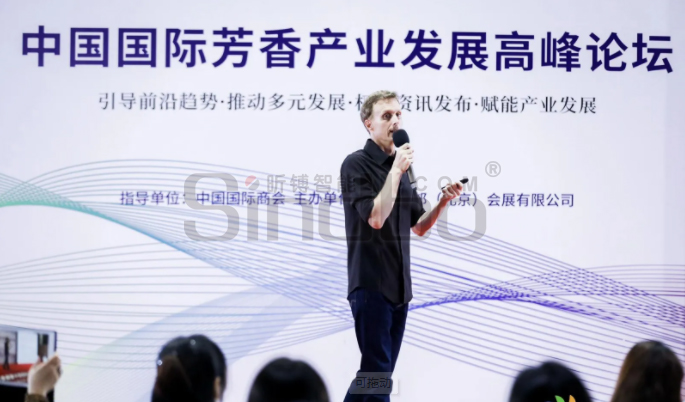
In recent years, China's aromatic industry has become a new force in stabilizing the economy, promoting rural revitalization, and driving overall national economic growth. Against the backdrop of the country's proposal to make the health industry a national pillar strategic industry, the formulation and improvement of aromatic industry standardization work has become an urgent task.
As an influential industry group nationwide, the Beijing Fragrance Culture Promotion Association has always kept in mind its original mission and taken on the responsibility of the times. In 2019, it released the world's first natural fragrance standardization system, which not only played a leading and promoting role in the development of the industry, but also became a twisted band for the integration of culture and industry, China and the world with the traditional Chinese cultural elements and connotations of its standards. Once this standard was launched, it received high attention and widespread praise from the industry. In 2021, the Beijing Fragrant Culture Promotion Association focused on the current situation of the domestic market, the policy requirements of national health, the internationalization of the aromatic industry, and the protection and promotion of China's excellent culture from multiple dimensions. After sufficient research, discussion, consultation, and demonstration, it was finally decided to initiate the standardization work of the "General Guidelines for Fragrant Products with Regional Advantages in the Aromatic Industry" and the "General Guidelines for Qualification of Aromatic Industry Positions". Excellent experts, scholars, industry units, and enterprises from all over the country will jointly participate in the drafting.
The General Guidelines for Regional Advantageous Aroma Products in the Aromatic Industry are aimed at implementing the national plan to promote the inheritance and development of traditional crafts. For traditional craft projects with regional characteristics, it is hoped to promote the inheritance of traditional crafts through standard formulation and publication, in order to cultivate and form traditional craft advantage characteristic industrial belts or clusters. How to integrate non indicator elements such as geography and culture into the standard without compromising fairness is a great challenge for the formulation of the standard. For example, how to determine and measure the weight of the definition of "regional advantage", which includes various elements such as authentic fragrant materials, (intangible cultural heritage) cultural inheritance, and specific crafts?
The preparation of the "General Qualification Guidelines for Aromatic Industry Positions" is also the same. In China, the "Hehe" culture is combined to allocate fragrance positions. Is it defined as "Hehe Master" or "Hehe Master"? In historical texts, "He Xiang" and "He Xiang" are mixed and used without clear boundaries. Including them in the standards not only ensures the accuracy of the standards but also protects the continuity of culture. Therefore, the standard drafting team completed the drafts of the two standards with a serious, rigorous, and responsible spirit after more than a year. The "General Guidelines for Regional Advantageous Fragrances in the Aromatic Industry" lists the relevant general terms and definitions for the qualification review of regional advantageous fragrances, as well as the review principles, review plans, review absences, and includes guidelines for subsequent review work; In the "General Guidelines for Qualification of Aromatic Industry Positions", the classification, level, qualification conditions, training, assessment, and evaluation criteria for seven positions, including fragrant tree growers, fragrant tree seedling workers, fragrant product manufacturers, fragrance therapists, fragrance evaluators, and aromatic health therapists, have been determined. In order to standardize the professional behavior of aromatic industry personnel, improve their business abilities, and provide a basis for the identification of vocational skills in various links of the aromatic industry. After the completion of the standard, an online expert review meeting was held in May 2022 according to the process.
The review experts come from the national industry elites, including Mr. Lin Chengjie, member of the National Flavor essence Cosmetics Standardization Technical Committee, Professor Ma Xiaotong of the Chinese Academy of Traditional Chinese Medicine, Professor Cheng Tangren, executive director of the National Flower Engineering Technology Research Center, Professor Jiang Xiwang of Jianghan University, Professor Jin Chenggang of Beijing Normal University, Professor Lv Guohua of the Chinese Academy of Agricultural Sciences, Professor Yi Fengping of the essence Flavor Cosmetics Department of Shanghai Application University, Professor Liu Song, deputy director of the CGAPA Expert Committee of the Ministry of Agriculture and Rural Affairs, Dr. Xiao Lei of Peking University, and Dr. Li Yinlong of the Chinese Academy of Traditional Chinese Medicine, etc. Experts first affirmed the necessity and importance of the establishment of these two standards, and conducted lively and in-depth discussions and exchanges on the creative new topics proposed in the standards that have the connotation of Eastern fragrance culture and are combined with modern aromatic concepts. Through discussions, many new viewpoints were formed and valuable revision suggestions were provided to the drafting group. The drafting team spent four months repeatedly revising, changing, and improving based on the opinions raised by experts, and held the second online expert review meeting in September 2022, which was unanimously approved.
The aromatic industry has taken a place in the health industry and is closely related to people's lives, involving fields such as agriculture, forestry, daily necessities, education, tourism, and management; Aromatic products cover various fields such as traditional Chinese medicine herbal health industry, spice food industry, aromatic plant cultivation, skincare and beauty industry, traditional fragrance industry, etc. The innovation of the group standard formulation has paved the way for the maturity of the future aromatic industry standard. As Lin Chengjie, member of the National Flavor essence Cosmetics Standardization Technical Committee, commented, "With the enhancement of national strength, the aromatic industry has exported specific tangible products such as plant essential oil, incense, dish incense, tower incense, perfume, sachets and other products online and offline, and has developed in the direction of aromatic art presentation, aromatic production technology and fragrance combining skills. The two group standards of the General Criteria for Regional Advantage Products in the Aromatic Industry and the General Criteria for Post Qualifications in the Aromatic Industry reviewed this time are of great significance for the selection of industry specifications and the evaluation of job practitioners. This is a great thing that has created a new field. The traditional Chinese fragrance defined in the fragrance industry standards is completely different from the industrial version of fragrance that we understand. It is an important carrier and element for demonstrating Chinese cultural confidence and spreading Chinese traditional culture. ”
Mr. Lin Chengjie shared his understanding of fragrance over the past 30 years of his career: "For a period of time, the fragrance industry has been using fewer and fewer natural raw materials for the economic interests of individual enterprises, and chemical fragrances have filled 85% of the market. Fragrance was originally a trinity of aroma, fragrance, and fragrance, but chemical synthetic products only have aroma without fragrance, let alone fragrance. This has formed a potential and long-term disturbance to the spiritual healing that the fragrance industry needs to carry. Consumers purchase fragrance materials that have fragrance but no fragrance, and fragrance activities are not heartfelt, which is not conducive to the development of the fragrance industry in the long run
The drafting units of this standard are Beijing Folklore Museum, China Food Newspaper, National Flower Engineering Technology Research Center, Yunnan Minzu University Fragrance Culture Research Institute, Jiangxi University of Traditional Chinese Medicine, Shanghai University of Applied Technology Fragrance essence Cosmetics Department, Shaanxi University of Traditional Chinese Medicine, China International Education Television, Beijing Huitong Fragrance Culture Research Institute, Kunming Fragrance Biotechnology Co., Ltd., Fujian Natural Fragrance Culture Association, Jiangxi Guxiang Jinyun Health Industry Co., Ltd., Hebei Quyang Sculpture School, Meizhou Shengpin Agarwood Museum, Oufang Biotechnology (Shanghai) Co., Ltd., Yunnan Zhihe Fragrance Culture Co., Ltd., Tianjin Xinyi Fragrance Culture Exchange Center, Dalian Jiuwu Fragrance Making Co., Ltd., Beijing Xiangguang Jixiang Cultural Communication Co., Ltd., Beijing Shangyijia Research Institute of Traditional Chinese Medicine Tianfu Fragrant Therapy and Health Technology Research Institute, etc.



 Tel:
Tel:
 Phone:
 Email:
 Addr:
Addr:
 Follow: