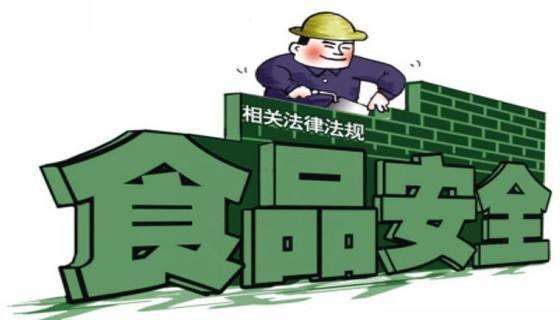
To ensure food safety, we must rely on and strengthen the rule of law, "Cao Sanming, Executive Vice President of the China Consumer Rights Protection Law Research Association, said in an interview with the author. According to experts, both the new Consumer Law and China's current Food Safety Law clarify that if the behavior of producers and operators constitutes a crime, they will be held criminally responsible in accordance with the law. As for the specific issues related to conviction and sentencing in criminal proceedings, they are based on the Criminal Law and relevant judicial interpretations.
Scientific sentencing for food safety crimes
Experts introduced that on May 1, 2011, the Eighth Amendment to the Criminal Law was officially implemented, which made significant amendments to food safety crimes, mainly involving the crimes of producing and selling food that does not meet safety standards, dereliction of duty in food safety supervision, and production and sale of toxic and harmful food. Among them, the crimes of producing and selling food that does not meet safety standards and producing and selling toxic and harmful food are the two basic crimes of endangering food safety. The amendment made important changes to the conviction and sentencing circumstances of these two crimes. In response to the prominent situation of crimes endangering food safety in some places, the amendment has added two charges of abuse of power in food safety supervision and dereliction of duty in food safety supervision, providing a powerful weapon for investigating and prosecuting crimes of dereliction of duty endangering food safety.
The "Interpretation of the Supreme People's Court and the Supreme People's Procuratorate on Several Issues Concerning the Application of Law in Handling Criminal Cases Involving Endangering Food Safety" (hereinafter referred to as the "Interpretation"), released in the first half of this year, clarifies the conviction and sentencing standards for crimes related to endangering food safety, proposes judicial determination standards for relevant charges, and unifies the legal application opinions for new and difficult cases. For the crimes of producing and selling food that does not meet safety standards and producing and selling toxic and harmful food, Articles 1 to 7 of the Interpretation provide specific criteria for determining the conviction and sentencing circumstances of these two crimes for the first time. In response to the limitations of understanding and identifying the aggravating element of "personal harm consequences" from the perspective of minor and serious injuries in previous judicial practices, the "Interpretation" combines the characteristics of food safety crime cases and sets multiple identification standards from the aspects of injury, disability level, and functional impairment caused by organ and tissue damage.
Crack down on the abuse and illegal addition of food additives
The abuse of food additives is currently a prominent food safety issue. To punish such crimes in accordance with the law, Article 8 of the Interpretation for the first time clarifies the relevant legal application standards from three aspects. One is to refine the "production and sales" stipulated in the Criminal Law into "processing, sales, transportation, storage" and other links, in order to achieve full coverage of the entire chain of food processing, circulation, etc; Secondly, it is clarified that the "food" stipulated in the Criminal Law includes not only processed food, but also edible agricultural products (000061, stock bar); The third is to clarify that the abuse of food additives, which can cause serious food poisoning accidents or other serious foodborne diseases, should be convicted and punished for the crime of producing and selling food that does not meet safety standards.
The illegal addition of food poses extremely serious risks. In order to punish such crimes in accordance with the law, Article 9 of the Interpretation clarifies for the first time the issue of legal application standards from three aspects: firstly, in response to the practice of using toxic and harmful non food raw materials to process food, such as using "gutter oil" to process edible oil, it is clarified that such "reverse addition" behavior also belongs to the criminal law's provision of "adding toxic and harmful non food raw materials to food produced and sold"; Secondly, based on the serious harm of substances prohibited by the state, it is clarified that substances prohibited by the state are toxic and harmful substances. Any act of adding prohibited substances to food should be convicted and punished for the crime of producing and selling toxic and harmful food; Thirdly, based on the frequent occurrence of illegal addition of prohibited drugs in current health food, such as adding harmful drug ingredients such as "sibutramine" to weight loss health food and adding "Viagra" to men's health food, it is clearly stipulated that such behavior should be convicted and punished for the crime of producing and selling toxic and harmful food. In addition, for the first time, the conviction and punishment standards for the production and sale of food additives and food related products that do not meet safety standards have been clarified.
The Supreme People's Procuratorate re examines seven types of dereliction of duty crimes
The author has recently learned that the Supreme People's Procuratorate has requested a re examination of seven types of food safety dereliction of duty crimes. Recently, the Supreme People's Procuratorate issued a notice requiring procuratorial organs at all levels to conscientiously implement the Eighth Amendment to the Criminal Law, focusing on investigating and punishing seven types of dereliction of duty crimes that endanger food safety, such as government officials who fail to fulfill their duties, engage in favoritism and fraud, and indulge in the production and sale of counterfeit and inferior food, toxic and harmful food.
The notice requires that illegal and criminal acts that endanger food safety be severely punished in accordance with the law, and must be combined with the investigation and prosecution of dereliction of duty crimes committed by state organ staff in the field of food safety supervision. The focus of the investigation and prosecution includes criminal acts such as state organ staff sheltering and condoning illegal production, helping criminals evade punishment, and acting as a "protective umbrella" for criminal gangs and organized crime.



 Tel:
Tel:
 Phone:
 Email:
 Addr:
Addr:
 Follow: